Introduction: This
prerecorded series of 6 training webinars presents the specifics of a Film Budget and how to manage,
estimate & report the actual costs with the Cost Report. New to this
workshop is an examination of the 6 different cost control systems that every
auditor, producer, line producer, UPM, etc needs to know in order to manage the
costs as they occur.
Note: In addition to the videos, you will also receive all related materials, including real movie budgets, Excel templates, union agreements, etc.
Course Objective: At
the end of the series of 6 recorded training sessions attendees will be in an excellent position
to manage, manipulate, defend or question a Film Budget and a Cost Report. (Note: during the film production the Weekly Cost
Report goes to all higher powers, and it’s the document audited for State Tax
Incentives – it’s a career maker/breaker.)
Participants: Participants will
identify the specific ways to manage film production expenditures (known
as ‘Managing
Film Budgets’ in the film industry) and how to present the financial
statements (known as ‘Cost Reports’ in the film industry). At
the end of the series of 6 prerecorded webinar sessions attendees will be in an excellent position
to manage, manipulate, defend or question a Film Budget and a Cost Report.
Who Is It For:It is not only vital
for Producers, Production Managers, etc., it's also vital for the Public
Accountants (who will audit the final Cost Report) to understand what it's all
about. Assistant Film Accountants can use this series of on-line sessions to help them
to upgrade to a Key Film Accountant.
Major Topics:Here's a bullet summary of the 6 prerecorded training webinars.
gain a
fluid understanding of the categories and terms used in a usual Film
Budget
learn
the film industry union wage jargon
learn
the effect of “fringes” (contributions to union and government
institutions) in managing a film production budget
working
with the concept of Labor Worked Hours, Paid Hours and Fringes,
especially when working longer hours
introduce the method and procedure of creating a weekly cashflow based on a budget, as acceptable within the industry.
introduce the Weekly Cost Report & give examples of what a career-maker/breaker
it is
introduce
the 6 basic cost control systems and how these can be managed (as a
Producer, UPM, etc.)
gain
familiarity with the procedure of managing the costs using actual examples
of Purchase Orders, Check Requisitions, etc.
practice
how to ensure the costs are reflected in the cost report
practice
how to estimate costs through to completion
of the project using standard industry specific procedures
learn
how to present the standard Weekly Cost Report, inclusive of Over/Under
Budget line-items, in an acceptable format
have all working templates and budgets referred to in the videos at your finger tips.
Prerequisite:
Anyone with an aptitude for numbers, or some film production background, or accounting experience.
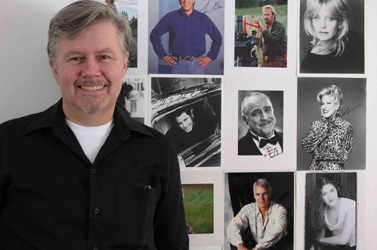
About John Gaskin:John Gaskin is a working film production accountant. He is a veteran of over 50 film and television productions over 30 years in 6 different countries. He has worked with such notable directors as Ron Howard, Rank Oz and Walter Salles, as well as a variety of lower budgeted productions. He has acclaim as a lively instructor who
has an
impressive list of video and written testimonials. See more about each of John Gaskin, testimonials and the benefits of this course.
Cost $99.00 for all 6 courses, or $29.99 Each - This cost is specially priced for Indies
About John Gaskin, Testimonials and Benefits John Gaskin has worked on more than 50 film and TV productions, working in 6 different countries over 3 decades. He has worked on all sizes of productions, including 2 with Ron Howard.
John has worked on 50 different productions in 6 different countries, working with greats such as Ron Howard, Frank Oz and Walter Salles - as well as small independent films and TV episodic productions, pilots and mini-series. During his career many of his assistants have gone on to become Key Accountants (another term for the Production Auditor).
John also has Supervising Producer credits - see his resume on IMDb. In his previous seminars he was touted as the Billion Dollar Man because the accumulated budgets that have been under his control has exceeded a Billion Dollars.
John's book, "Walk The Talk" is required reading at the University of Southern California's Cinematic Arts (Peter Stark Graduate Producer's Program), as well as the Producer's Program at the University of Tampa, where John has an open invitation to deliver seminars. John's book is also used and recommended by at least one mentor, Michael Glick, at the American Film Institute. John has numerous internet articles on Google Knol and EzineArticles and enjoys answering your questions on his blog - film production.
John has several 'Testimonials' but his favorites are from Ron Howard and David Valdes (David worked with Clint Eastwood for a chunk of his career and has been an independent producer for some time in his own right). Click here to see Ron Howard's letter, and here for David Valdes's hand written note. Another testimonial that John is proud of is Peter D. Marshall's book review. Peter is a 35 year veteran film director and instructor. Visit John's Web Site for more testimonials. For a quick 2-minute video of Testimonials, CLICK HERE. When Ron Howard asked John why the budget was so high on a feature film production they were doing in New York, John was tongue tied. After that John was determined to get it right the next time, so he wrote a book, called "Walk The Talk" which shows any filmmaker, or any novice film producer, how to "Direct the Money" during a film production.
To see more about John's credentials see the following:
Testimonials: Below is a video clip of attendees from one of my workshops in Detroit
Some quotes to give you a concept of my basic nature - my workshops are never boring:
"Over a year ago I opened a dialogue with you with the hopes of gaining more knowledge of production accounting practicing and some tips for really breaking in... And I just wanted to let you know that as of today, I am 4 days away from wrapping out my first show as Key Accountant. It was only an 800K feature, but a feature nonetheless.... And in a rebate state (North Carolina).
We payrolled all crew
(non union), SAG, and background... So every week, I had three individual payrolls. Plus obvious things like AP and Petty Cash... But I made it through! Just wanted to say thanks for the help." - Josh, North Carolina
"The presenter (John Gaskin) was excellent...candid, straightforward, respectful of the audience. I especially liked the real life examples, they're the best way to learn about finances. The casual format stimulated great conversation between audience and presenter." Christy,CPA Florida
"I took John’s 2 day budgeting workshop, and his one day Michigan film credit
workshop in August. He is wonderful! The time flew by, and I found
myself hoping he would re-do his production accounting workshop in Michigan, so
I could attend that as well! He provided us a lot of very useful, and current materials.
At our workshop we all brought laptops, and had hands on experience
learning to use Movie Magic Budgeting. John is very good at
teaching this material, and provided us with many valuable tips and
tricks. He has a wealth of real-world experience, and often spiced up his
presentation by sharing this experience with us. A few who had planned on
taking only the Budgeting workshop, decided to stay and signed on to take the
Michigan Film Credit workshop he offered the next day – and two of them had no
plans to film in Michigan!Carol A,CPA Michigan
Testimonials: Below is a video clip of attendees from one of my workshops in Toronto.
"I had such a great time this weekend. It was a pleasure to meet John and take in the wealth of knowledge he was willing to share with us. It was also great to see someone who is a finance professional be successful in a field that (when all the money talk is over) nurtures the creative drive of so many individuals." Marie M., CA- Came to Toronto from Baltimore.
"I just wanted to thank you both for the excellent workshop. It was really well organized & delivered, full of great content, and fun! It was also a place to network. I really look forward to future seminars." Craig L.,CA, Toronto
Honestly, I have attended a lot of seminars to keep up with the required 40 hours of CPE for my CPA status and this was easily one of the best ones I've been to. The venue, the topics, instructor and the class participants were all excellent. John keeps things interesting by adding his personal experiences and was always great at explaining nuances/ terms specific to the industry
- having the materials
emailed before the seminar was also very helpful." Irene W., CPA, came to Toronto from Ohio
"John
Gaskin and what he shares is just not available, ANYWHERE! John 's
workshop seminars are perfect, they are the ONLY SHOW IN TOWN for the
seasoned film professional or aspiring filmmaker; or that CPA , lawyer,
general business person wanting make a career change or added value to
what they do, by segueing into the entertainment business.
John Gaskin is film professional that instills trust and enthusiasm and
calls it as it is! From his years of experience as a production auditor
/accountant/ production executive ( all my higher powers) with his
expertise in budgeting, cost reporting, dealing with bond companies,
managing contracts of every description, working with producers(and
being one himself), production managers and studio executives ensure a
production is produced on time and on budget. He brings his vast
cross-over disciplinary skills and experience to an nuts and bolts
result in his book "Walk The Talk", which I use in my producing course
at University of Tampa. His presentations ( including EP budgeting & scheduling)and workshops are just not
the how to's... but the why's . He shares all the interpersonal goings
on with the bottom line- the result. And the money involved to get that
result. I am grateful to have discovered "Walk the Talk" and John
Gaskin and look forward always to introduce John's his book and
information that I have found there, and no where else!" Tom Garrett, University of Tampa
Benefits of the Weekend Workshops: The workshops provide you with a practical 'door opener' to film production - as a novice Line Producer, Producer's or Director's Assistant, Production Assistant, Film Accounting, etc.
FEES INCLUDE: my ebook "Walk The Talk", multiple formated film budgets, flow charts of film accounting systems, a typical film productiion organization chart, SAG payroll templates, IATSE Low Budget Agreement payroll helper template, cashflow templates, hot cost templates, 6 prerecorded webinar training sessions, etc.
You will receive a copy of John's book, "Walk The Talk" jammed with practical tools of the trade.
All practical assignments are based on John's 25 years experience in film production.
John will be discussing the practical aspect of finding opportunities in the film industry. John makes no promises, but he has
many years of experience finding work as a film auditor and will mentor you on his successful actions and contacts.
If you have any further questions about the on-line training, or about the film business in general, feel free to email John Gaskin.
Participants Understanding: John Gaskin will be consulting the participants understanding of the materials during the workshops with practical drills, direct questions, short quizzes, etc. The number of “Contact Hours”
during the course will be provided to you for your purposes.
Attendance &
Participation:Attendance will be
taken. The “Clock-Hours” and the results of the attendee’s practical
assignments and random quizzes (both
verbal and otherwise) will form an integral part of John Gaskin's assessment of your understanding of the materials.
Refunds Policy:All fees paid by the applicant shall be
refunded if the applicant is rejected by the instructor (John
Gaskin) before enrollment. An application fee of $25.00 may
be retained if the application is denied. All fees paid by the applicant
shall be refunded if requested within 3 calendar days after starting the
workshop. All refunds shall be returned within 30 days.